As of March 2026, Dubai's real estate market stands out as one of the world's most dynamic and investor-friendly destinations. The emirate benefits from no annual property taxes on ownership or rental income, attractive gross rental yields typically ranging from 5-9% depending on the area and property type, strong regulatory frameworks through the Dubai Land Department (DLD), and pathways to long-term residency via the Golden Visa for investments of AED 2 million or more.
After exceptional growth in recent years—with transactions exceeding AED 680 billion in 2025—the market is transitioning to a more mature phase. Analysts from Knight Frank, Cushman & Wakefield, and others forecast modest price appreciation: around 3% in prime segments and 1% in mainstream areas for 2026. Supply is increasing significantly, with estimates of 100,000–160,000 new residential units potentially completing this year (though historical delays often reduce actual handovers to 50-60% of projections). This could lead to stabilized or selectively moderated rents and prices, particularly in apartment-heavy mid-market zones, while villas and prime locations remain resilient due to persistent demand from families, professionals, and high-net-worth individuals.
Dubai's 2040 Urban Master Plan continues to drive sustainable urban expansion, focusing on connectivity, green spaces, and population growth toward 5.8 million residents. For investors, the emphasis should shift from short-term speculation to long-term fundamentals: tenant demand, infrastructure maturity, developer reliability, and realistic net returns (often 4-6% after service charges of AED 10-25 per sq ft, 4% DLD fees, maintenance, and potential vacancies).
This guide highlights the strongest investment areas based on current trends, balancing rental income potential, capital appreciation prospects, and associated risks.
Why Location Remains Critical in Dubai Real Estate
Dubai's neighborhoods perform differently based on factors like proximity to business districts, waterfront access, amenities (schools, healthcare, retail, metro), supply pipelines, and tenant demographics. Prime areas offer stability and liquidity but command higher entry prices (AED 1,500–4,000+ per sq ft). Mid-market communities provide stronger yields but face more volatility from new completions. Emerging zones promise higher long-term upside but involve greater uncertainty around timelines and absorption.
In 2026, key traits of successful locations include:
- Proven or growing end-user demand (families in suburban hubs, professionals in urban cores)
- Balanced supply (limited in villas, higher in apartments)
- High-quality developers with strong delivery records (e.g., Emaar, Damac)
- Connectivity and lifestyle amenities sustaining occupancy above 85-90%
Investors should calculate net yields carefully, as gross figures (often quoted at 6-8% citywide) drop after costs. Diversification—mixing stable prime assets with higher-yield mid-market or growth-oriented emerging plays—helps manage risks like localized oversupply or economic fluctuations.
Established Top Investment Areas in 2026
Dubai Hills Estate
Developed by Emaar, this master-planned community offers a suburban, family-focused lifestyle with a championship golf course, extensive parks, top schools, hospitals, and retail. Positioned centrally between Downtown and Marina, it attracts long-term residents seeking green spaces and community.
Villas and townhouses (entry around AED 3-5 million) typically deliver gross yields of 5-7%, supported by strong family demand and limited villa supply across Dubai. Capital appreciation is expected to remain steady at 3-6%, driven by resale liquidity and end-user preference.
Strengths: Family-oriented ecosystem, consistent demand, good resale market.
Considerations: Higher entry prices compress yields compared to mid-market; potential traffic from nearby growth. Ideal for capital preservation and stable income.
Dubai Marina
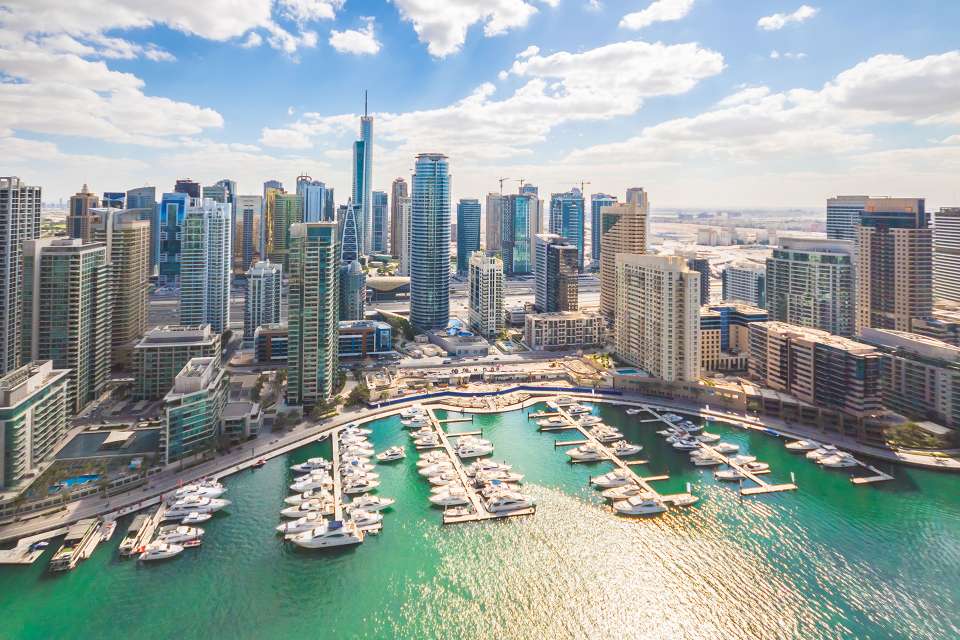
This iconic waterfront district continues to excel for rental income, drawing young professionals and expatriates with its vibrant promenade, yacht views, restaurants, and proximity to business hubs like Media City.
High-rise apartments (AED 1.5-3 million entry) offer gross yields of 6-8%, with strong short-term rental potential (subject to DTCM regulations). Occupancy rates stay high at around 90%, though rent growth may moderate to 5-7% amid new supply nearby.
Strengths: Proven rental performance, lifestyle appeal, liquidity.
Considerations: Elevated service charges (AED 15-25/sq ft), competition from adjacent areas. Best for income-oriented strategies.
Downtown Dubai
Anchored by Burj Khalifa and Dubai Mall, Downtown is the epitome of prestige and capital preservation. Limited land scarcity supports steady value, attracting international buyers and luxury tenants.
Apartments (AED 2-4 million+) yield 5-7% gross, with 3-5% appreciation forecast in prime segments. Low vacancy and quick resale make it a blue-chip choice.
Strengths: Global landmark status, strong liquidity, tenant quality.
Considerations: Premium pricing, sensitivity to tourism cycles. Suited for low-volatility, long-term holds.
Palm Jumeirah
The ultra-luxury artificial island delivers exclusivity with beachfront villas and branded residences. Supply constraints and HNWI demand drive premium pricing.
Villas (AED 10-20 million+) yield 4-6% gross but excel in capital growth (5-7% potential), bolstered by scarcity and international appeal.
Strengths: Exclusivity, value retention, prestige.
Considerations: High maintenance costs, exposure to global wealth trends. For high-net-worth investors.
Jumeirah Village Circle (JVC)
This mid-market hub has become a yield leader, offering affordable apartments and townhouses (AED 800,000-1.5 million) popular with young professionals and small families.
Gross yields often reach 7-9% (among the highest in Dubai), fueled by growing retail, roads, and community facilities.
Strengths: Strong income potential, accessible entry, tenant demand.
Considerations: Higher oversupply risk in apartments (possible 10-15% localized pressure), lower prestige. Excellent for yield-focused portfolios.
Dubai Creek Harbour
Emaar's waterfront mega-project positions as a future premium destination with skyline views, modern towers, parks, and expanding metro/retail.
Off-plan and ready units (AED 1-2 million) target 6-7% gross yields post-handover, with 5-8% appreciation as infrastructure matures.
Strengths: Long-term growth drivers, master-planned appeal.
Considerations: Phased delivery risks, current maturity level. For growth-oriented investors.
Final Thoughts
In 2026, Dubai's best investment areas—Dubai Hills Estate for balanced family appeal, Dubai Marina for reliable income, Downtown for prestige, Palm Jumeirah for luxury preservation, JVC for high yields, and Dubai Creek Harbour for future upside—cater to varied strategies amid a stabilizing market.
With strong underlying demand from global capital, economic resilience, and urban planning momentum, Dubai remains compelling. Success lies in realistic expectations, thorough due diligence, and alignment with personal goals—whether prioritizing steady rental cash flow, capital growth, or portfolio diversification.
