
Dubai’s real estate market remains one of the most dynamic investment destinations globally, supported by strong expatriate demand, ongoing infrastructure development, and a business-friendly environment. While the city offers attractive opportunities, achieving strong returns requires a clear understanding of current market realities, including rental yields, capital appreciation potential, and associated costs and risks.
This updated 2026 guide provides balanced insights into high-potential areas and property types, realistic ROI expectations, and practical factors every investor should consider. Whether you are a first-time buyer or an experienced investor, focusing on data-driven decisions will help you navigate the market effectively.
What Makes Dubai Attractive for Real Estate Investment?
Several structural advantages continue to draw international capital to Dubai:
Favorable Tax Environment:
There is no personal income tax on rental yields and no capital gains tax on the sale of residential property for individual investors. This allows investors to retain a higher portion of returns compared to many global markets. However, a 4% Dubai Land Department (DLD) transfer fee applies on purchases (often split or paid by the buyer), along with minor administrative and registration costs. Note that investors from countries with worldwide taxation (such as the US) may still have home-country reporting obligations.
Rental Demand:
Dubai’s growing population of expatriates, professionals, and tourists supports steady rental demand. Occupancy rates remain healthy in well-located communities.
Capital Appreciation Potential:
Ongoing projects and infrastructure improvements contribute to long-term value growth, though price appreciation moderated in early 2026 after strong gains in 2024–2025.
Market Transparency and Regulation:
The Dubai Real Estate Regulatory Agency (RERA) provides oversight, and platforms like Property Finder and Bayut offer reliable data for informed decisions.
As of late 2025/early 2026, the city-wide average gross rental yield stood at approximately 6.76%, with apartments averaging around 7.07% and villas closer to 4.93%. Gross yields represent rental income before expenses; net yields (after service charges, maintenance, vacancy, and management fees) are typically 1–2% lower.
Top Areas for Balanced ROI in 2026
Location remains critical. Here are five popular areas with updated, realistic performance indicators (gross rental yields; actual results vary by unit size, building quality, and rental strategy — short-term vs. long-term):
Dubai Marina
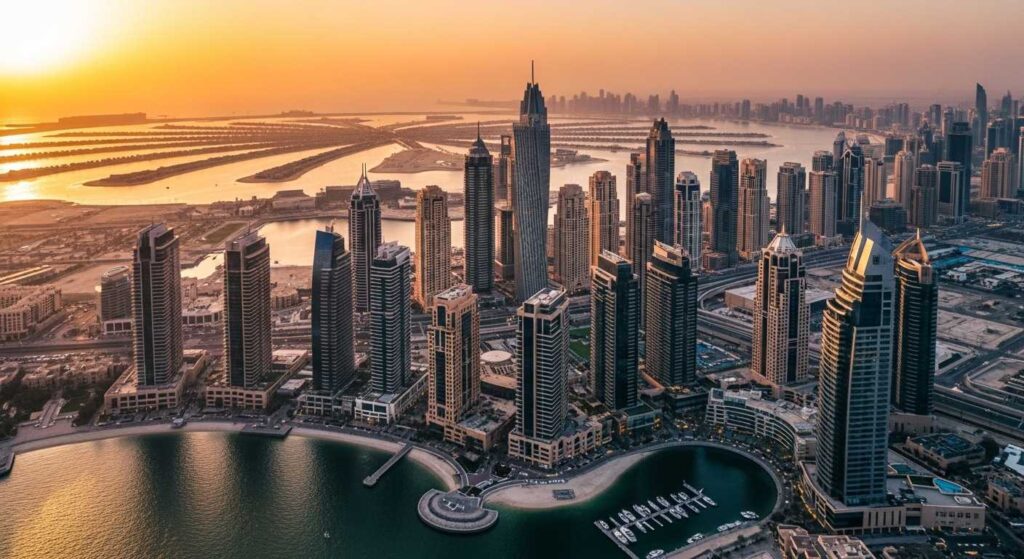
This iconic waterfront community offers luxurious apartments with strong appeal to tourists and professionals. Gross rental yields typically range from 5.5–7% (higher for studios and 1-bedroom units, lower for larger ones). The area benefits from excellent amenities, beach access, and vibrant lifestyle options, supporting both short-term (Airbnb-style) and long-term rentals.
Key Highlights: High liquidity, strong demand, and good potential for moderate capital appreciation. Ideal for investors seeking a mix of income and lifestyle appeal.
Downtown Dubai
Home to the Burj Khalifa and Dubai Mall, this central hub attracts global visitors and corporate tenants. Average gross yields are around 5.5–6.5%, with smaller units sometimes performing better. While yields are more moderate, the area offers strong long-term capital appreciation potential due to its prestige and continuous development.
Key Highlights: Global recognition, low vacancy for quality properties, and access to premium retail and entertainment.
Jumeirah Village Circle (JVC)
JVC has become a favorite for yield-focused investors thanks to more affordable entry prices and solid demand from young professionals and families. Gross rental yields often range from 7–8.5% (studios and 1-beds can reach the higher end).
Key Highlights: Relatively lower purchase prices, family-friendly environment, and a good balance of yield and future growth as the community matures.
Dubai Hills Estate
This master-planned community combines green spaces, parks, and premium facilities like golf courses. Gross yields typically fall in the 5.5–6.5% range, with stronger emphasis on capital appreciation and long-term family rentals.
Key Highlights: Desirable for end-users and tenants seeking a suburban feel within the city, with excellent infrastructure.
Business Bay
Adjacent to Downtown, Business Bay serves professionals with a mix of residential and commercial developments. Gross yields average 6–7.5%, supported by corporate demand.
Key Highlights: Convenient location, growing business ecosystem, and solid rental stability.
Additional Note on Higher-Yield Areas:
For investors prioritizing maximum cash flow, more affordable communities such as Discovery Gardens, Al Furjan, Dubai Investments Park, or International City often deliver gross yields of 7.5–10%. These areas suit budget-conscious strategies but may offer lower capital appreciation and liquidity compared to prime locations.
Property Types and Their ROI Potential
Different property types suit different investment goals:
Apartments (especially 1- and 2-bedroom units):
These generally provide the strongest rental yields due to high demand and affordability. They perform well in both tourist-heavy and professional areas. Smaller units in prime or mid-tier locations often achieve the best cash-flow results.
Villas and Townhouses:
These attract long-term family tenants and tend to have lower vacancy rates. However, gross yields are typically lower (4.5–6%) because of higher purchase prices. They shine in family-oriented communities like JVC, Dubai Hills Estate, or Arabian Ranches, where lifestyle appeal supports steady occupancy.
Off-Plan Properties:
Buying before completion can offer lower entry prices and flexible payment plans (often 50–70% during construction). This strategy provides potential for capital gains upon handover, particularly in emerging areas like Dubai Creek Harbour, Dubai South, or expansions in Dubai Hills. However, risks include construction delays, quality variations, and market shifts during the build period. Always research the developer’s track record and escrow protections under RERA regulations.
In 2026, apartments continue to outperform villas on pure rental yield, while a balanced portfolio combining yield-focused and appreciation-focused assets often delivers the best overall ROI.
Key Factors to Consider Before Investing
Successful investing in Dubai goes beyond location and yields. Here are essential considerations:
Gross vs. Net Returns:
Always calculate net yield. Typical deductions include service charges (higher in luxury buildings), maintenance, potential vacancy (especially in seasonal short-term rentals), and property management fees (5–10% of rent if outsourced). A property showing 7% gross may deliver 5–6% net.
Property Management:
Professional management can improve occupancy and reduce headaches, particularly for overseas investors. Reputable firms help with tenant screening, maintenance, and legal compliance under RERA rules.
Financing Options:
Non-residents can access mortgages with loan-to-value ratios up to 50–80% depending on the bank, property type, and buyer profile. Compare interest rates and fees carefully, as leverage can amplify both gains and risks.
Due Diligence:
Review title deeds, service charge history, building quality, and proximity to future infrastructure. Use trusted platforms and consult RERA-registered agents. For off-plan, verify escrow accounts and completion timelines.
Exit Strategy:
Dubai’s market is relatively liquid in popular areas, but holding periods of 3–5+ years often allow better realization of appreciation while benefiting from rental income.
Conclusion
Dubai offers compelling opportunities for real estate investors, with gross rental yields that remain competitive globally (typically 6–8% in many areas, and higher in affordable segments) combined with tax advantages and growth potential. Popular communities like Dubai Marina, Downtown Dubai, JVC, Dubai Hills Estate, and Business Bay provide a mix of rental income and lifestyle appeal, while more budget-oriented areas can deliver stronger cash flow.
However, realistic expectations are essential. Returns vary significantly based on property specifics, management efficiency, and broader market conditions. Net yields after costs are what truly matter, and no investment is entirely risk-free. Capital appreciation, while historically strong, is moderating as the market matures.
For best results, diversify across property types or areas, conduct thorough due diligence, and consider working with experienced local advisors. Investors who focus on quality assets, sustainable demand drivers, and long-term fundamentals are best positioned to benefit from Dubai’s continued evolution as a global hub.
Whether your goal is steady rental income, capital growth, or a combination of both, Dubai’s real estate market in 2026 rewards informed and patient investors. Always verify the latest data from sources like Property Monitor, Bayut, or Property Finder, as market conditions can shift.
