
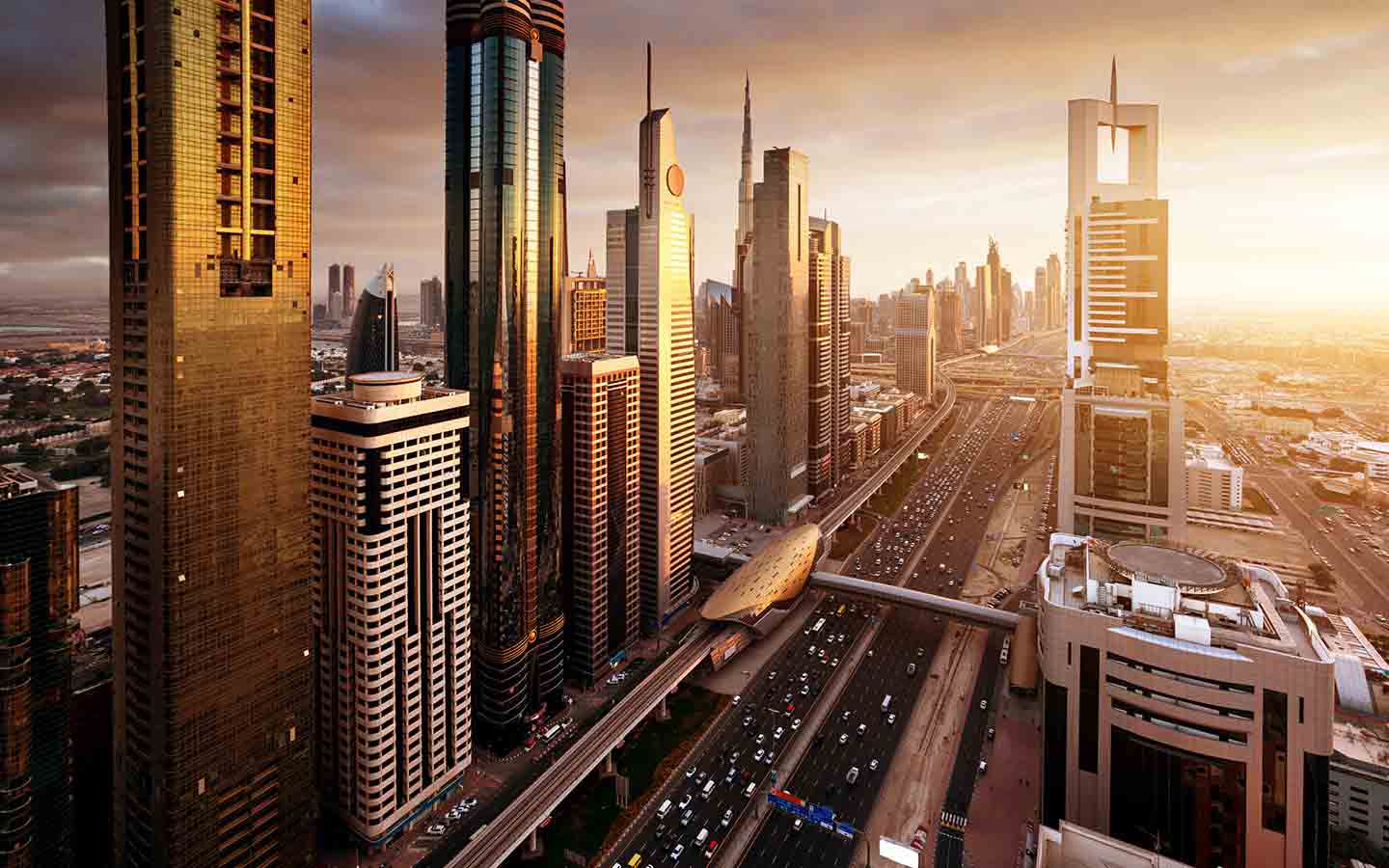
Dubai continues to rank among the world’s most dynamic destinations for commercial real estate investment. As of Q1 2026, the emirate’s commercial property market recorded approximately AED 38 billion in transaction value across over 3,600 deals, reflecting sustained investor confidence despite a more selective environment. For business owners, investors, and international buyers, Dubai commercial properties for sale still offer compelling potential—but success now depends more than ever on choosing prime, high-quality assets in the right locations rather than assuming broad-based gains.
The market has evolved from the rapid growth of 2024–2025 into a value-driven, data-focused phase. Prime Grade A offices, logistics facilities, and well-positioned retail assets continue to deliver strong occupancy and rental performance, while secondary properties face greater competition and moderating growth. With approximately 2 million sq ft of new office space and 6.6 million sq ft of industrial/logistics supply scheduled for delivery in 2026, buyers must prioritize location strength, asset quality, tenant demand, and long-term relevance.
This guide provides a clear, balanced overview of Dubai’s commercial property market in 2026—highlighting genuine advantages alongside practical considerations—so you can make informed decisions.
Why Dubai Remains a Strong Market for Commercial Real Estate
Dubai’s appeal stems from its strategic geography, business-friendly regulations, world-class infrastructure, and diversified economy. As a gateway between Asia, Europe, and Africa, the city attracts multinational firms, startups, retailers, logistics operators, and service providers across finance, technology, tourism, healthcare, education, and trade.
In 2026, the market is resilient but selective. Prime office vacancies in core districts (DIFC, Downtown Dubai, Business Bay) remain below 5%, supporting rental stability and yields typically in the 7–9% range for quality assets. Logistics and industrial segments benefit from e-commerce and nearshoring trends, with Grade A occupancy near 95% and yields often reaching 8–10%. Retail in high-footfall areas also performs well, though secondary locations recover more slowly.
Key strengths include:
- Strategic global connectivity
- Modern infrastructure and free-zone incentives
- Diverse tenant base across resilient sectors
- Potential for steady income and measured capital appreciation in prime assets
However, the market is not uniform. Upcoming supply and a shift toward quality-focused investment mean that not every commercial property will deliver the same returns—prudent selection is essential.
What Are Dubai Commercial Properties for Sale?
Dubai commercial properties for sale are non-residential assets purchased for business operations, leasing, or investment. They cater to owner-occupiers, tenants, and institutional buyers seeking income stability or portfolio diversification.
Common types include:
- Office spaces
- Retail shops and showrooms
- Full commercial buildings
- Warehouses and industrial units
- Mixed-use developments
- Medical/clinic spaces
- Hospitality-related commercial assets
Each category has distinct demand drivers, risk profiles, and return potential. Matching the asset to your goals—whether owner-occupation, rental income, or long-term holding—is critical.
Types of Commercial Properties Available in Dubai
Office Spaces
Office units range from compact suites to full-floor corporate headquarters in premium towers. Demand remains robust in prime business districts, where Grade A space enjoys near-full occupancy and stable rents (averaging around AED 238 per sq ft in Q1 2026, still 14% higher year-on-year). Ideal for corporate HQs, tech firms, consultancies, financial services, and professional practices.
Retail Shops and Showrooms
Retail assets thrive in high-traffic locations such as malls, community hubs, and mixed-use developments. Prime retail benefits from strong footfall and consumer spending, while secondary areas require more active management. Suitable for fashion, F&B, wellness, pharmacies, and specialty services.
Warehouses and Industrial Units
Logistics and industrial properties are in high demand due to Dubai’s role as a global trade hub. With e-commerce growth and supply chain expansion, Grade A warehouses often achieve 95%+ occupancy and attractive yields. Ideal for storage, distribution, light manufacturing, and import-export operations. Note: 6.6 million sq ft of new supply is expected in 2026, which may ease tightness toward year-end in some sub-markets.
Mixed-Use Commercial Assets
These versatile properties integrate offices, retail, and sometimes hospitality or residential elements. They benefit from built-in synergies and broader tenant appeal, making them resilient in evolving market conditions.
Best Areas to Explore Commercial Property in Dubai
Location remains the single most important factor. Prime zones consistently outperform secondary ones in occupancy, rental growth, and resale liquidity.
Business Bay & Downtown Dubai:
Premier addresses with strong corporate demand, low vacancy, and excellent connectivity. Prime office values and rents have shown solid growth.
Sheikh Zayed Road:
High-visibility corridor ideal for offices and showrooms.
Dubai Marina & JLT:
Popular for mixed business and service-oriented operations, supported by residential density.
Al Quoz & Dubai Industrial City:
Strong for warehouses, showrooms, and creative/light industrial uses.
Dubai Silicon Oasis & Free Zones:
Tech-focused and trade-oriented hubs offering 100% foreign ownership, tax benefits, and ecosystem advantages. Free zones suit international trade and specialized sectors, though some businesses prefer mainland options for local market access.
Benefits of Investing in Dubai Commercial Properties for Sale
When selected strategically, commercial assets can provide:
- Stable income: Longer lease terms from business tenants often lead to higher occupancy and predictable cash flow.
- Portfolio diversification: Commercial properties behave differently from residential during market cycles.
- Owner-occupier advantages: Greater control over operations, brand visibility, and long-term cost certainty.
- Premium location value: Prime assets in established districts benefit from ongoing infrastructure upgrades and business influx.
That said, commercial investments typically involve higher entry costs, more complex management, elevated service charges (especially in premium towers), and greater sensitivity to economic shifts than residential properties. Yields are attractive but not guaranteed across all segments.
What to Consider Before Buying Commercial Property in Dubai
Success requires thorough due diligence. Key factors include:
- Location and connectivity: Proximity to transport, airports, and business hubs.
- Asset quality and developer reputation: Grade A buildings with modern amenities and ESG features command premiums.
- Permitted use, service charges, and maintenance: These can significantly impact net returns.
- Tenant demand and occupancy history: Review current leases and market absorption.
- Regulatory framework: Understand ownership structures, DLD processes, and free-zone vs. mainland rules.
- Supply pipeline and market cycle: 2026 deliveries may moderate rental growth in select segments by late in the year.
- Exit strategy: Commercial properties can take longer to sell than residential units.
Buyers should also factor in transaction fees (typically 2–4% including agent commissions and DLD fees) and potential exposure to broader economic or geopolitical influences.
How to Identify a High-Potential Commercial Property
The strongest assets share these traits:
- Prime or emerging high-demand micro-locations
- Strong visibility, accessibility, and parking
- Flexible, efficient layouts with modern infrastructure
- Proven or easily achievable tenant appeal across multiple sectors
- Reliable building management and low vacancy track record
- Alignment with future trends (smart offices, ESG compliance, logistics efficiency)
For retail: Prioritize footfall and frontage. For offices: Focus on image, amenities, and transport links. For warehouses: Emphasize loading access and proximity to ports/airports.
Why Commercial Property Buyers Prefer Dubai in 2026
Dubai stands out for its globally recognized business environment, continuous infrastructure investment, high-quality inventory, and innovation focus. The market’s evolution toward smart, flexible, and sustainable spaces aligns with corporate priorities. While prime assets continue to attract international capital, the selective nature of 2026 rewards informed buyers who prioritize quality over speculation.
The Future of Commercial Real Estate in Dubai
Looking ahead, Dubai’s commercial market is expected to remain linked to economic diversification, population growth, and sector expansion. Key trends for 2026 and beyond include:
- Demand for ESG-compliant, smart, and flexible workspaces
- Growth in logistics driven by e-commerce and trade
- Mixed-use developments that create integrated ecosystems
- Opportunities in growth corridors supported by Dubai’s 2040 Urban Master Plan
New supply in 2026 will create choice for occupiers and potentially stabilize rents in certain sub-markets, reinforcing the importance of selecting well-positioned, high-quality properties. Overall, the outlook remains positive for strategic investors focused on long-term fundamentals rather than short-term hype.
Conclusion
Dubai commercial properties for sale in 2026 represent a mature, opportunity-rich market that rewards careful selection. With strong transaction momentum (AED 38 billion in Q1 alone), low prime vacancy, and attractive yields in quality assets, the city continues to appeal to businesses and investors seeking stability and growth potential.
However, the era of easy broad-based gains has shifted toward a more measured, value-driven landscape. Prime Grade A properties in core districts and high-performing logistics assets are likely to deliver the most reliable performance, while secondary or average assets require active management and realistic expectations.
Whether you seek owner-occupied premises, rental income, or portfolio diversification, approach your decision with clear goals, professional advice, and up-to-date market data from sources such as the Dubai Land Department, CRC Property, Savills, or JLL. A well-chosen commercial property in Dubai can still become a cornerstone of a resilient investment strategy in one of the region’s most dynamic economies.
