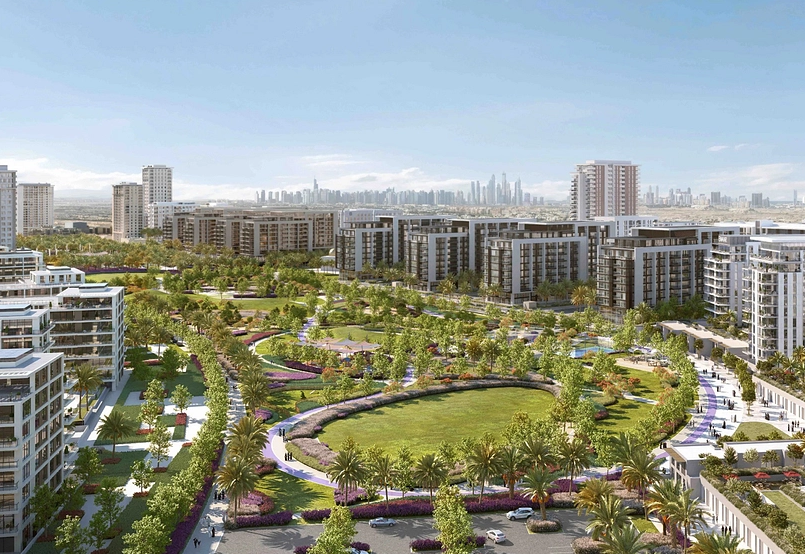
In the ever-evolving landscape of Dubai's real estate market, Dubai Hills Estate stands out as a master-planned community that blends luxury, sustainability, and strategic growth potential. Developed by Emaar Properties within Mohammed Bin Rashid City, this expansive development spans over 11 million square meters and offers a harmonious mix of residential options, green spaces, and premium amenities. As we enter 2026, the market has matured from the rapid post-pandemic boom, shifting toward sustainable, measured expansion driven by end-user demand and institutional investment. For investors and homebuyers alike, Dubai Hills Estate provides a compelling case, with its family-friendly appeal and resilient performance amid a stabilizing citywide market.
This updated guide addresses the realities of investing in Dubai Hills Estate in 2026, drawing on the latest market data. We'll examine its strengths, property types, updated return expectations, and potential risks, while incorporating broader trends shaping Dubai's real estate sector. Whether you're a seasoned investor eyeing capital gains or a first-time buyer seeking a vibrant lifestyle, understanding the nuanced outlook is key to making informed decisions. With Dubai's population projected to grow by over 200,000 annually and economic diversification fueling demand, areas like Dubai Hills remain resilient—but not without considerations like increasing supply and global economic influences.
Dubai Real Estate Market Overview in 2026
As of February 2026, Dubai's real estate market is characterized by steady, balanced growth following the explosive gains of 2024–2025. Total transaction values reached AED 686.8 billion in 2025, marking a record high, with off-plan sales dominating at over 64% of deals. This momentum has carried into 2026, with January sales hitting AED 55 billion, up 44% year-on-year, though with fewer transactions and higher average values, signaling a shift toward larger, long-term investments.
Key trends include a moderation in price appreciation, forecasted at 5–10% across premium segments, down from 12–18% in 2025. Rental growth has similarly eased to 6–8% annually, reflecting increased supply from 28,100 units delivered in 2025 and another 40,000–50,000 expected in 2026–2027, concentrated in areas like Dubai Hills, Jumeirah Village Circle (JVC), and Business Bay. Citywide gross rental yields average 6.5–6.8%, outperforming global benchmarks like London (3–4%) or New York (4–5%), but premium communities trend lower at 5–6% due to higher entry prices.
Demand remains robust, driven by expat inflows, visa reforms (e.g., Golden Visa expansions), and Dubai's positioning as a global hub for finance, tech, and tourism. End-users now comprise a larger share of buyers, prioritizing lifestyle over speculation, which bolsters stability in family-oriented areas. However, the market is entering a "mature phase," with vacancies at 2–7% citywide and potential rent softening in oversupplied segments. Sustainability is a growing focus, with eco-friendly designs and green spaces attracting buyers amid Dubai's net-zero goals by 2050.
In this context, Dubai Hills Estate exemplifies resilience: its integrated amenities and central location continue to draw families and professionals, with rents up 20–25% in 2025 but moderating to 6–8% in 2026. Yet, investors must navigate increased handovers, which could heighten competition for tenants.
Why Choose Dubai Hills Estate for Investment?
Dubai Hills Estate's appeal lies in its thoughtful design as a self-contained "city within a city," offering a serene escape from urban hustle while maintaining excellent connectivity. In 2026, it remains a top choice for its blend of luxury, community focus, and solid fundamentals.
1. Prime Location with Seamless Connectivity
Centrally positioned, Dubai Hills Estate provides quick access to key hubs: Downtown Dubai (15 minutes), Dubai Marina (20 minutes), and Dubai International Airport (25 minutes) via Al Khail and Umm Suqeim Roads. Recent additions like two new bus routes enhance public transport, reducing reliance on cars and appealing to eco-conscious residents. Proximity to the upcoming Metro Blue Line extensions further boosts long-term value, potentially increasing property prices by 6–12% in connected areas. This connectivity makes it ideal for professionals and families, ensuring high occupancy rates.
2. Competitive Rental Yields and Capital Appreciation
In 2026, gross rental yields in Dubai Hills Estate average 5–6% for apartments and 4–5.5% for villas/townhouses, reflecting premium pricing but still attractive compared to global averages. Net yields (after maintenance and fees) typically range 4–5%, with furnished units commanding 10–25% higher rents. For example, a 1-bedroom apartment rents for around AED 100,000 annually, while 3-bedroom villas fetch AED 250,000–350,000.
Capital appreciation is projected at 5–10% for 2026, driven by limited supply in premium sub-areas and ongoing infrastructure enhancements. Historical data shows steady gains, with villas outperforming apartments due to family demand. Combined ROI scenarios suggest 11–14% total returns (yields plus appreciation), making it a balanced play.
3. Comprehensive Amenities and Lifestyle Offerings
Dubai Hills Estate excels in amenities, promoting wellness and convenience. Key features include:
- Dubai Hills Mall: Over 650 outlets, dining, cinemas, and recent phased expansions adding more retail space.
- Dubai Hills Golf Club: 18-hole championship course with club facilities.
- Dubai Hills Park: 180 hectares of green space, including jogging tracks, splash pads, pet parks, and picnic areas.
- Active Lifestyle Options: 54 km of cycling/walking trails, 14 tennis courts, and community pools.
- Education and Healthcare: Three operational schools (e.g., GEMS International) and nearby clinics, with expansions planned.
These elements foster a vibrant, cosmopolitan community, enhancing tenant retention and resale appeal.
4. Sustained Demand Amid Market Shifts
Demand persists from locals, expats, and investors, with villas and townhouses leading due to scarcity. In 2026, family buyers dominate, drawn to the green, integrated environment, while short-term rentals (e.g., via Airbnb) yield 9–12% in peak seasons.
Types of Properties Available
Dubai Hills Estate caters to diverse needs with a range of options:
Luxury Villas and Townhouses:
3–7 bedrooms, featuring private pools, gardens, and golf views. Prices start at AED 4.5–9 million for 3–4 bedrooms, ideal for families seeking space and privacy.
Apartments:
1–3 bedrooms with park or skyline views, priced AED 1.6–3.8 million. Suited for professionals or smaller households.
Off-Plan Properties:
Projects like Laura or Rosehill by Emaar offer flexible payments (e.g., 80/20 plans) and potential gains upon completion in 2027–2029. These allow entry at lower prices but require due diligence on timelines.
Investment Potential in 2026
Looking ahead, Dubai Hills Estate's potential hinges on infrastructure maturity and demand stability. With handovers adding supply, expect moderated growth: 5–10% appreciation and 6–8% rent increases. The Expo 2020 legacy indirectly supports through enhanced infrastructure, but current drivers like population growth and sustainability initiatives are more pivotal. Eco-features, such as green designs, align with buyer preferences, potentially boosting values 6–12% in rail-proximate areas.
Tips for Investors
- Research Thoroughly: Use tools like Dubai Land Department data for trends.
- Diversify: Balance with other areas like Dubai South for higher yields (7–9%).
- Focus on End-Users: Prioritize furnished, view-facing units for better returns.
- Consult Experts: Engage agents for legal due diligence and financing options.
Conclusion
Dubai Hills Estate remains a strong, balanced investment in 2026, offering lifestyle perks and moderate returns in a maturing market. With updated yields of 5–6% and 5–10% appreciation, it's suited for long-term holders, though supply dynamics warrant caution. As Dubai thrives, this community positions investors well—approach with data-driven strategy for optimal outcomes.
