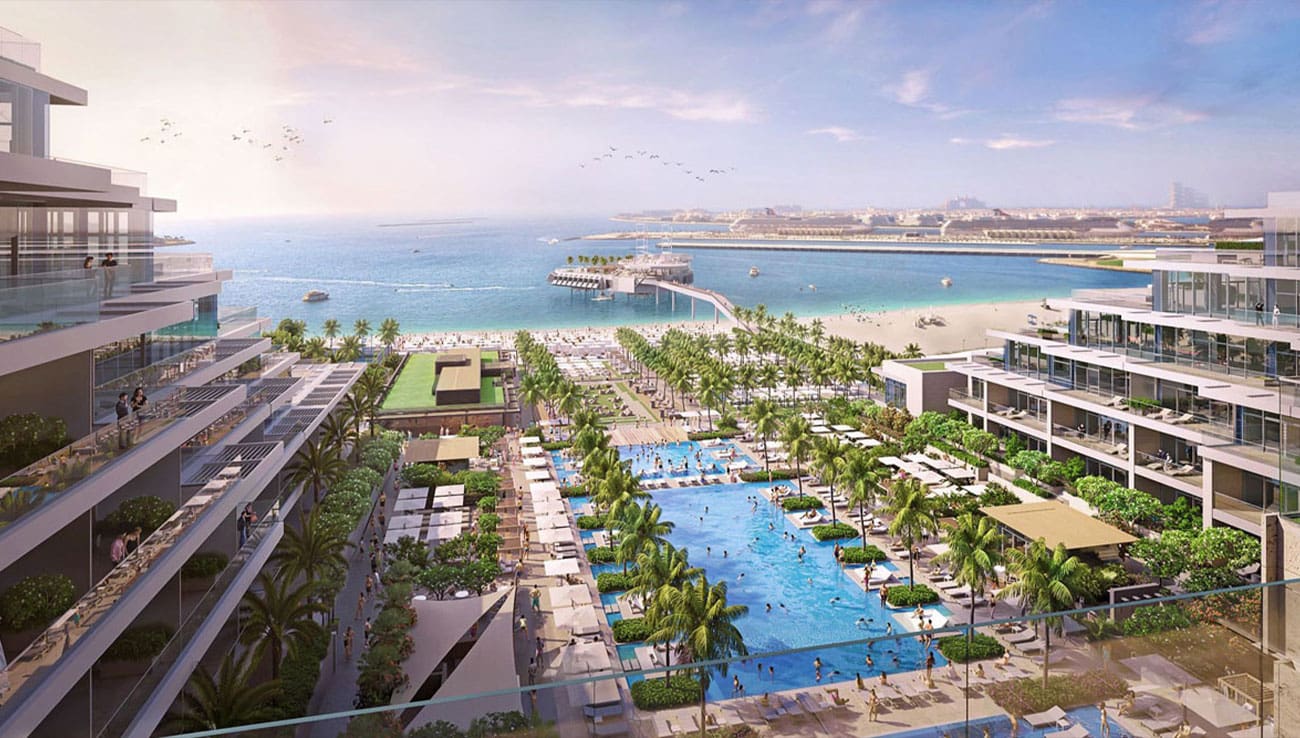
Dubai’s real estate market continues to rank among the world's most attractive and resilient destinations for investors and homebuyers as of March 10, 2026. Off-plan properties—purchased before completion—remain the dominant force in transactions, typically comprising 60-65% of monthly sales volume. This dominance stems from competitive launch pricing, extended payment plans tied to construction milestones, and the opportunity for capital appreciation as projects progress toward handover.
The market has transitioned from the exceptional post-2022 boom into a more normalized phase. Fundamentals like population growth, tourism recovery, major infrastructure projects (e.g., expansions at Dubai South and Al Maktoum International Airport), and pro-investor policies sustain demand. However, a substantial supply pipeline—projected at around 180,000 residential units across 2026–2028 (averaging ~60,000 annually, though actual handovers often fall to 48-60% due to delays)—combined with recent geopolitical tensions (including the US-Israel-Iran conflict and related regional instability), has introduced moderation. Foreign buyer sentiment has faced temporary pauses, leading to selective demand, occasional distress resales in premium segments, and expectations of slower price growth or modest corrections in certain apartment-heavy areas.
This detailed guide (approximately 1500 words) provides a realistic, balanced approach to selecting off-plan properties in Dubai. It emphasizes opportunities while transparently addressing risks, current data from sources like ValuStrat, Moody's, DLD reports, and market analyses, and practical steps for informed decision-making.
What Are Off-Plan Properties in Dubai?
Off-plan refers to purchasing real estate units directly from developers during the planning, design, or construction stages—often 2–5 years before completion. Payment structures typically involve a 10–20% down payment, followed by phased installments linked to construction milestones, with the balance due on handover.
Dubai maintains one of the world's strongest investor-protection frameworks for off-plan sales. All projects must register with the Dubai Land Department (DLD) and Real Estate Regulatory Agency (RERA). Buyer funds are held in supervised escrow accounts under Law No. 8 of 2007, released progressively only upon verified milestones. This structure significantly reduces risks like developer insolvency, though it does not shield against construction delays, market shifts, or external shocks.
Key popular locations for off-plan in 2026 include:
- Established premium hubs: Downtown Dubai, Dubai Hills Estate, Palm Jumeirah, Dubai Marina.
- Growth-oriented mixed-use: Dubai Creek Harbour, Business Bay.
- Infrastructure-driven emerging: Dubai South, Jumeirah Village Circle (JVC), Dubai Islands.
These areas benefit from varying degrees of connectivity, amenities, and future upside, but performance diverges—prime locations show greater resilience amid supply pressures.
Why Off-Plan Properties Remain Attractive in 2026
Despite market maturation, off-plan continues to lead for compelling reasons:
Competitive Pricing and Flexible Structures :
Launch prices often sit 20–30% below projected completion values, with payments spread over years (e.g., 60–70% during construction). Post-handover plans from some developers further ease affordability.
Capital Appreciation Opportunity :
Strong historical gains (20–30%+ from launch to handover in prime projects) persist in well-positioned developments, though 2026 forecasts point to more moderate growth of around 7–10% overall (per ValuStrat), with villas/townhouses outperforming apartments (up to 17% in some segments) due to supply weighting toward apartments.
Contemporary, Sustainable Features :
New launches prioritize smart-home integration, energy-efficient designs (e.g., LEED-certified), open layouts, and wellness amenities.
Integrated Lifestyle Communities :
Master-planned projects offer parks, schools, retail, healthcare, and transport, boosting end-user appeal and rental demand.
Visa and Residency Benefits :
Properties valued at AED 2 million+ qualify for the 10-year Golden Visa, drawing long-term investors.
Selectivity is now essential: Buyers increasingly favor established developers and high-demand locations over speculative or volume-driven launches.
Essential Factors for Choosing Off-Plan Property
Developer Reputation and Delivery History
Focus on proven track records. Leading developers in 2026 include:
- Emaar Properties : Dominant in master communities (e.g., Dubai Hills Estate, Creek Harbour); excellent on-time performance and quality.
- Nakheel : Waterfront specialist (Palm Jumeirah, Dubai Islands).
- DAMAC Properties : Luxury-oriented with branded partnerships.
- Others: Sobha Realty (high-end finishes), Aldar (nature-focused expansions like The Wilds Residences), Binghatti (volume mid-market).
Assess past deliveries, buyer feedback, financial health, and RERA compliance. Avoid unproven entities.
Location and Future Connectivity
Prioritize access to highways, metro, business districts, schools, hospitals, and planned infrastructure (e.g., Dubai South's airport/Expo synergies). Emerging areas promise higher upside but carry more volatility.
Master Community Masterplan
Review holistic visions: green spaces, education, retail, transport. Integrated communities (e.g., Dubai Hills) maintain stronger demand than isolated towers.
Design, Layout, and Amenities
Examine floor plans, unit sizes/configurations, views, smart features, pools, gyms, co-working spaces, and sustainability. Match to personal use or rental potential.
Construction Stage and Timeline
Use DLD/RERA portals for progress updates. Early buys offer better pricing but higher delay exposure.
Amenities and Rental Potential
Premium facilities enhance appeal. Rental yields average 6–8% emirate-wide, with strong areas like JVC (7–9%), Dubai South (7–8%), and Arjan (7–9%) delivering higher returns for mid-market apartments.
Overall Investment Outlook
Dubai's long-term drivers—economic diversification, tourism, population influx—remain robust. Off-plan fuels activity, but expect stabilization as supply rises and geopolitics introduce caution.
Actionable Tips for Buyers in 2026
- Rely on official DLD/RERA data and tools for verification.
- Compare 3–5 comparable projects across price, developer, location, and terms.
- Engage independent advisors or licensed brokers for objective guidance.
- Account for costs: 4% DLD transfer fee, ~2% agent commission, registration, etc.
- Weigh off-plan vs. ready: Off-plan suits growth seekers; ready provides immediate income/lower risk.
- Stay updated on launches—e.g., Aldar's nature-led The Wilds Residences (launched February 2026) highlight wellness trends.
Future Outlook for Off-Plan in Dubai
Dubai's sector evolves toward sustainability, smart technology, and balanced communities. Off-plan will likely retain a strong share (potentially 60%+), bolstered by government initiatives. 2026 signals maturation: selective, quality-focused growth favoring established developers and resilient areas over volume speculation. While supply pressures and external risks introduce caution, absorption from demand drivers should prevent major corrections.
Conclusion
Selecting an off-plan property in Dubai requires diligent research, risk awareness, and alignment with personal goals. Prioritize trusted developers (e.g., Emaar, Nakheel), strategic locations, integrated communities, and realistic expectations amid moderating growth, supply dynamics, and geopolitical factors. Dubai's regulated protections, economic strength, and global positioning make it compelling—but informed, patient choices drive success over speculation.
Consult DLD resources, licensed professionals, or recent reports (ValuStrat, Moody's) for project-specific updates. With careful evaluation, off-plan offers a solid pathway to lifestyle benefits and long-term value in one of the premier real estate markets worldwide.
