
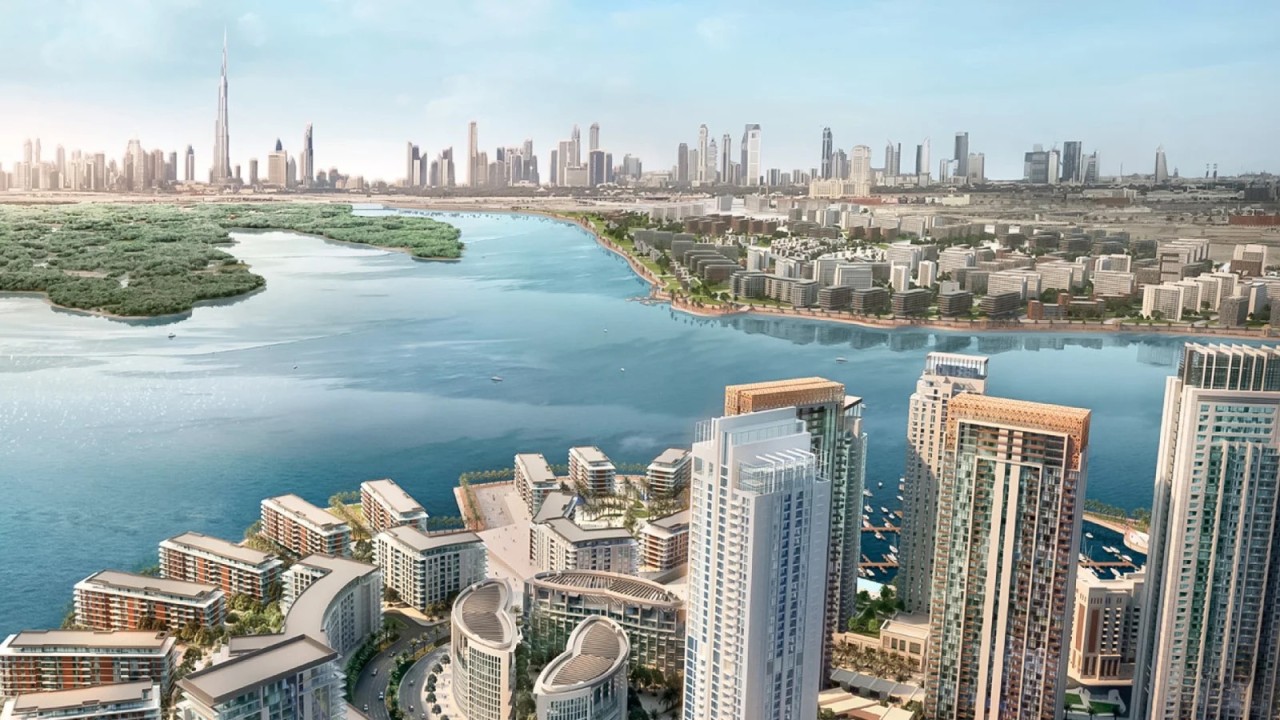
Dubai has become one of the world’s most internationally accessible real estate markets, and that is especially true for off-plan properties for foreign buyers in Dubai. For overseas investors, expatriates, and second-home buyers, the city offers a combination of legal clarity, structured project registration, escrow protection, and a steadily expanding investment environment. Foreign nationals and non-resident buyers can acquire freehold ownership in designated areas, while other property rights such as usufruct and long-term lease rights are also recognized under Dubai’s framework.
What makes off-plan properties for foreign buyers in Dubai especially attractive is that buyers are not simply purchasing a unit under construction. They are entering a market where project registration, escrow governance, provisional sale registration, and digital tracking tools are already built into the ecosystem. Dubai Land Department states that escrow rules apply to developers selling off-plan units and receiving buyer payments, with the purpose of regulating development activity and securing investor rights.
Can Foreign Buyers Purchase Off-Plan Property in Dubai?
Yes, foreign buyers can purchase off-plan property in Dubai in the areas where freehold ownership is permitted. The UAE government states that foreigners and expatriate residents may acquire freehold ownership rights in designated investment zones, while Dubai’s regulatory framework also recognizes additional rights such as usufruct and long leases in designated areas. This gives overseas buyers a lawful path to enter the market even if they do not live in the UAE full time.
Dubai’s approach has continued to evolve in a more open direction. In January 2025, Dubai Land Department announced that private property owners in parts of Sheikh Zayed Road and Al Jaddaf could convert ownership status to freehold for all nationalities, reflecting the emirate’s broader push to widen international ownership access and strengthen its global investment appeal.
For foreign buyers, this matters because it confirms that Dubai is not standing still. The city’s property system is moving toward greater accessibility, stronger transparency, and a more digital transaction journey. That is a major reason why off-plan properties for foreign buyers in Dubai continue to attract attention from end users and international investors alike.
Why Off-Plan Property Appeals to Overseas Buyers
One of the biggest attractions of off-plan property is access to new inventory in master-planned communities. Buyers can often choose from fresh layouts, newer buildings, updated amenities, and modern community planning rather than relying only on older stock. In Dubai, that advantage is supported by a policy environment aligned with long-term urban growth goals such as the Dubai 2040 Urban Master Plan and the Dubai Real Estate Sector Strategy 2033, both of which are designed to support urban development quality, market expansion, and international investment appeal.
Another reason off-plan properties for foreign buyers in Dubai stand out is the city’s strong digital infrastructure around real estate. Through Dubai REST, users can view details about certified developers and track off-plan projects using information such as completion percentage, actual project pictures, and escrow account numbers. For a buyer based overseas, that level of visibility is especially important because it reduces information gaps that often make international real estate buying feel uncertain.
Dubai’s market momentum also adds to buyer confidence. Dubai Land Department reported that in Q1 2026, total real estate transactions reached AED 252 billion, up 31% year on year in value, with transaction volume also rising. While every buyer should still evaluate project quality carefully, the wider market data indicates continued investor confidence and healthy activity rather than a stagnant pipeline.
The Legal and Regulatory Safeguards That Matter
The strongest argument for off-plan properties for foreign buyers in Dubai is not only the product itself. It is the structure around the product.
Dubai Land Department explains that the escrow account system is intended to regulate the building and construction process of off-plan units and guarantee investors’ rights. All amounts received from buyers of off-plan units are required to be deposited into the project escrow account, and payments out of that account are tied to construction progress and verified milestones. The account trustee engineer checks whether the construction phase has been completed before disbursements are made.
That mechanism is critical for foreign buyers because it creates a separation between project funds and general developer use. DLD also states that the escrow account must be opened in the project’s name and used only for developing that project, while a portion of the funds is retained after completion as a guarantee for defect-related issues appearing within the specified period after handover.
There is also the provisional registration process. Dubai Land Department’s initial sale registration service allows developers to register off-plan units whose value has not yet been fully paid at the provisional register, and the related Oqood system is specifically used for provisional sale registration. In practical terms, this means the transaction is not just a private promise between buyer and seller. It sits inside a formal registration system recognized by the regulator.
What Foreign Buyers Should Check Before Booking
Buying off-plan successfully is less about speed and more about disciplined verification. Before committing to any project, foreign buyers should focus on the following areas:
- Verify that the developer is properly registered and active within Dubai’s regulated system. Dubai REST provides certified developer information.
- Confirm that the project is properly registered and trackable through official channels. DLD’s project status tools are designed for this exact purpose.
- Review the escrow framework and make sure the project has the required escrow structure attached to buyer payments.
- Understand the sale and purchase agreement in detail, including payment milestones, delivery terms, default clauses, variation clauses, and cancellation provisions.
- Use professional support such as a qualified broker, legal adviser, and where needed, mortgage adviser or transaction specialist.
For foreign buyers, due diligence is not optional. Distance can make projects look similar on marketing material, but the real difference often lies in developer reputation, project registration status, construction governance, and contract detail.
The Buying Journey for a Foreign Buyer
The journey usually begins with identifying a suitable project in a permitted ownership area and reviewing the developer, master community, completion timeline, and contract terms. After reservation, the buyer typically moves into formal documentation and payment steps. Because the transaction is part of the off-plan regulatory process, provisional registration through Oqood is a key stage in the journey rather than a side formality.
Once the purchase is underway, foreign buyers can use Dubai REST to monitor project progress and access project-level information that supports better oversight during construction. This is particularly useful for overseas investors who may not be physically present in Dubai during the entire building cycle.
At completion, the process moves toward final ownership documentation in line with the project’s completion and handover milestones. Buyers should ensure every step is matched against official registration, developer communication, and the sale agreement rather than relying only on informal updates. This disciplined approach is what turns off-plan properties for foreign buyers in Dubai from a speculative decision into a structured investment process.
Common Advantages for International Buyers
Foreign buyers are often drawn to off-plan property in Dubai for a few consistent reasons. First, they gain access to newer communities designed around today’s lifestyle expectations, including integrated retail, wellness, shared amenities, mobility planning, and stronger placemaking. Second, they benefit from a market that is actively aligning itself with long-term strategy rather than short-term expansion alone. Third, the digital oversight tools available in Dubai are stronger than in many competing destinations.
A further advantage is that Dubai’s policy direction continues to support international capital. The Dubai Real Estate Sector Strategy 2033 specifically aims to raise market value, grow transaction volume, and reinforce the emirate’s appeal to global investors. That gives foreign buyers confidence that the city is planning for sustained competitiveness rather than depending only on temporary demand waves.
For some investors, real estate ownership can also intersect with residency planning. Dubai Land Department offers investor residence and investor golden visa-related services tied to property ownership criteria, although eligibility depends on official conditions and thresholds applicable at the time of application. Buyers should always verify the latest rules directly before making any residence-based decision.
Final Thoughts
Off-plan properties for foreign buyers in Dubai continue to stand out because the city combines international accessibility with formal registration processes, escrow controls, digital transparency tools, and a long-term development strategy. Foreign nationals can legally buy in designated ownership areas, projects are tied to regulated processes, and buyers have official tools to monitor progress and verify project information.
