
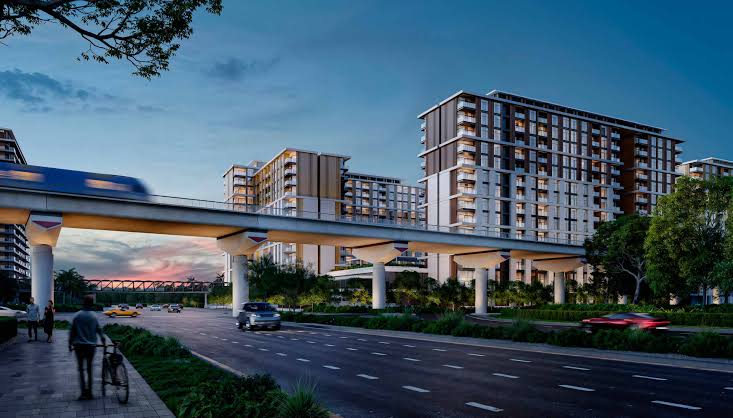
Dubai’s property market continues to evolve around connectivity, convenience and long-term urban planning. For many buyers and investors, access to public transport has become an important factor when choosing a location. Off-plan properties near Dubai Metro stations can offer modern homes, shorter daily journeys and broader appeal among professionals, families and tenants who value reliable links across the city.
The Dubai Metro currently operates on the Red and Green lines, serving major residential, commercial and lifestyle districts. A new Blue Line is under construction: a 30-kilometre route with 14 stations that will connect to the existing network and serve growing areas including Dubai Creek Harbour, Dubai Festival City, International City, Dubai Silicon Oasis and Dubai Academic City. Opening is currently targeted for 2029.
Yet proximity to a Metro station alone should never be the sole reason to buy. The strongest off-plan opportunities combine genuine accessibility with a proven developer, practical layouts, useful amenities and realistic long-term demand. This guide examines what “near Dubai Metro” actually means, the established and emerging locations, the real benefits and risks, and a clear framework for making an informed decision.
Why Metro Connectivity Matters
Dubai is a large, fast-moving city. Residents regularly travel between homes, workplaces and lifestyle destinations. Living near a Metro station can simplify these journeys, particularly for people working in Downtown Dubai, Business Bay, Dubai Internet City, Dubai Media City, Dubai Marina, Jebel Ali, Deira or Bur Dubai.
The Dubai 2040 Urban Master Plan reinforces this direction. One of its stated goals is for 55% of the population to live within 800 metres of a main public transport station. This reflects a broader shift toward integrated communities and reduced reliance on private vehicles.
Properties with convenient public transport access often appeal to professionals seeking shorter commutes, households looking for alternatives to daily car use, and international residents who prefer straightforward travel connections. Metro accessibility can also help a development remain relevant as surrounding neighbourhoods mature. However, transport links should support a wider property strategy rather than being treated as a guarantee of rental income or capital appreciation.
What “Near Dubai Metro” Really Means
The phrase “near Dubai Metro” can describe very different realities. One project may sit within a comfortable, shaded walk of an operating station. Another may require a shuttle, involve an awkward road crossing, or depend on a station that has not yet opened.
Before reserving an off-plan unit, buyers should verify:
- The actual walking route from the building entrance to the station entrance
- Presence of safe crossings, continuous pavements and shaded pathways
- Availability of feeder buses or community shuttle services
- Whether the station is already operating, under construction or only proposed
- The gap between the project’s expected handover date and the station’s planned opening
- Realistic journey times to key employment hubs and lifestyle destinations
A development that appears close on a map can still be separated by a major road, construction site or incomplete pedestrian infrastructure. A site visit and review of the community master plan remain essential. Equally important is the quality of the journey itself: direct access is more valuable than a route requiring multiple interchanges.
Established Areas for Off-Plan Properties Near Dubai Metro
Business Bay and Downtown Dubai
These mixed-use districts sit on the Red Line and offer offices, hotels, retail and leisure destinations. Off-plan properties here often attract professionals and investors seeking a central urban lifestyle. Location within the district still matters greatly. Walking distance to the station, surrounding construction activity, road access, apartment efficiency and future supply all influence livability and demand. A Business Bay address does not automatically equal easy Metro access.
Dubai Marina and Jumeirah Lakes Towers
These areas combine Metro and Tram connectivity with waterfront living, restaurants and entertainment. Stations such as DMCC and Sobha Realty serve the corridor. Buyers should still confirm the precise route from any given building. Even projects marketed as “Marina” can involve longer walks, shuttle reliance or significant road crossings. Building management quality, privacy, storage and everyday services often matter as much as transport links in these high-rise communities.
Al Furjan and Discovery Gardens
The Route 2020 extension improved Metro access across these residential areas and communities leading toward Expo City Dubai. They can suit families and professionals seeking a more residential environment with both rail and road connectivity. Off-plan projects here should be assessed alongside access to schools, supermarkets, clinics, parks and employment zones. Well-planned master communities generally offer stronger long-term appeal than isolated towers with limited surrounding facilities.
Deira and Bur Dubai
The Green Line serves these established districts, which already have commercial activity, shops, services and public transport demand. New developments can benefit from an existing population base rather than relying solely on future growth. Investors should examine congestion, parking, redevelopment plans and the character of the immediate surroundings. The strongest opportunities balance existing demand with contemporary residential standards.
Future Opportunities Near the Dubai Metro Blue Line
The Blue Line creates a new category of future-connected opportunities. The planned 30-kilometre route with 14 stations will interchange with the Red and Green lines and serve districts including Dubai Creek Harbour, Dubai Festival City, International City, Dubai Silicon Oasis and Dubai Academic City, along with areas such as Mirdif and Al Warqa’a.
Properties near confirmed future stations may gain appeal as construction progresses and supporting infrastructure develops. Dubai Creek Harbour may attract buyers interested in waterfront living, while Dubai Silicon Oasis and Dubai Academic City may appeal to professionals, students and those linked to technology and education. International City and Dubai Festival City have distinct residential and commercial profiles, so each location should be evaluated on its own fundamentals.
Future Metro access can support long-term relevance, but caution is required. Official confirmation of the route and stations is essential. Many properties will be completed years before the stations open. Investors need a clear view of how the project is likely to perform during that interim period rather than assuming immediate connectivity benefits.
Benefits of Buying Off-Plan Near the Metro
One clear advantage is broader residential appeal. Tenants who do not drive often exclude poorly connected communities but will consider homes with reliable rail access. This can expand the potential tenant pool to include professionals, couples, students and smaller families.
Buying off-plan can also allow entry before the building and surrounding area are fully mature. As construction finishes, landscaping appears, retail opens and transport links improve, the overall community may become more established.
Metro-connected properties can suit different ownership approaches: long-term rental, personal use, or eventual sale. Access to employment centres and daily services tends to support multiple buyer and tenant groups. For end users, reduced reliance on private cars can make journeys to offices, shopping destinations, airports and entertainment areas more convenient.
These benefits are not automatic. Developer quality, service charges, building management standards, future supply levels and the suitability of the specific unit all influence outcomes.
How to Choose the Right Metro-Connected Property
Verify the developer
Review completed projects, delivery track record, construction quality and after-sales service. A strong location cannot fully compensate for weak execution or poor management.
Confirm the transport connection
Use official RTA maps and announcements rather than sales brochures or unofficial online maps. Establish whether the station is operational, under construction or planned.
Compare completion timelines
Residential handover and Metro station opening may occur years apart. Understand what transport options and community facilities will actually be available when the keys are handed over.
Assess the wider community
Schools, supermarkets, healthcare, parks, road access and employment centres shape both lifestyle quality and rental demand. Metro access without everyday services can leave a development slow to establish itself.
Study future property supply
Districts with large volumes of similar apartments completing in the same period face greater competition. Compare layouts, views, facilities and construction quality against competing projects.
Select a practical unit
Studios and one-bedroom apartments often suit individual professionals. Larger units can appeal to couples and families. Efficient space, storage, natural light, privacy and functional kitchens usually matter more than decorative finishes. Match the unit type to the expected resident profile of the community.
Review ownership costs and documents
Factor in service charges, furnishing, maintenance, property management, agency fees and possible vacancy periods. Carefully examine the sale and purchase agreement, handover conditions, unit specifications and payment schedule. International buyers and first-time investors should consider independent legal or property advice before signing.
Conclusion
Off-plan properties near Dubai Metro can combine modern design, practical mobility and long-term relevance. Established Red and Green Line locations offer immediate connectivity, while the Blue Line is creating future opportunities across several growth districts.
The right decision requires more than selecting the project closest to a station on a map. Buyers should verify the actual transport connection, evaluate the developer, assess the wider community and choose a practical unit that matches their personal or investment goals. With careful research and realistic expectations, metro-connected off-plan properties can form a well-considered part of a Dubai property strategy.
