Dubai, the glittering emirate synonymous with innovation, luxury, and economic dynamism, continues to captivate global homebuyers and investors in 2026. With a population projected to reach 5 million by 2030 and a real estate market maturing after years of explosive growth, the demand for residential properties remains robust. Among these, ready-to-move villas—fully completed and handover-ready properties—stand out for their appeal to those seeking immediate occupancy without the uncertainties of off-plan developments. These villas offer a blend of opulence, convenience, and potential returns, making them ideal for expatriates relocating for work, families prioritizing quality of life, or investors eyeing stable assets in a tax-free haven.
However, as the market normalizes following rapid price surges (22% in 2023 and 18% in 2024), buyers must approach decisions with informed realism. Ready-to-move villas, often sourced from the secondary (resale) market, face tight supply constraints, with over 120,000 units slated for handover in 2026 but demand far outpacing availability in premium segments. This guide, updated for March 2026, explores the true benefits and challenges of these properties, their standout features, top communities, and a step-by-step process to secure the right one. Whether you're budgeting for a family haven or diversifying your portfolio, we'll equip you with data-driven insights to navigate Dubai's evolving landscape.
Why Choose Ready-to-Move Villas in Dubai?
Dubai's villa market offers diverse options, from compact townhouses to sprawling estates, but ready-to-move properties provide a compelling edge for time-sensitive buyers. Unlike off-plan villas, which dominate new launches (with handovers often delayed to 2027–2028), these are immediately occupiable, allowing you to settle in without construction risks. Yet, in a market where villa prices rose 15.16% year-on-year as of December 2025, understanding the trade-offs is crucial.
1. Immediate Availability Amid Tight Supply
The hallmark of ready-to-move villas is their handover-ready status, perfect for urgent needs like job transfers or family expansions. In 2026, this immediacy is more valuable than ever, as new supply—projected at 90,000 residential units citywide—leans heavily toward apartments, leaving villas in short supply. Secondary market resales in established communities often sell out within weeks, driven by family demand and investor flips. However, this scarcity means competition is fierce; expect bidding wars in hotspots, potentially adding 5–10% to asking prices. For investors, the upside is faster rental income generation, but first-time buyers should prepare for limited choices—fewer than 20% of listings are truly "move-in ready" without minor renovations.
2. Access to Mature Infrastructure
These villas are embedded in well-established neighborhoods, boasting seamless connectivity to Dubai's world-class amenities. Think proximity to international schools (e.g., Dubai British School clusters), top hospitals like Mediclinic, and retail hubs such as Mall of the Emirates. Transportation is a breeze with metro extensions and Sheikh Zayed Road access, reducing commute times to under 30 minutes for most downtown jobs.
That said, while infrastructure is "fully developed," ongoing urban expansions—like the Expo City legacy projects—can introduce temporary disruptions, such as roadworks. In 2026, with vacancy rates edging up modestly due to incoming supply (180,000 units through 2028), communities with proven amenities hold value better, offering stability against market cooling.
3. Eliminating Construction Risks in a Maturing Market
Off-plan purchases carry inherent delays—up to 20% of projects faced postponements in 2025 due to supply chain issues. Ready villas sidestep this, letting you inspect finishes, verify compliance with Dubai Land Department (DLD) standards, and close deals in 4–6 weeks. This certainty appeals in a market shifting from hype-driven booms to measured growth, where experts forecast 3–8% price moderation in mid-segment villas by year-end.
Caveat: Older ready properties (pre-2020 builds) may require updates for modern efficiencies, like energy retrofits amid Dubai's push for net-zero by 2050. Budget an extra 2–5% of purchase price for such tweaks to avoid surprises.
4. Premium Quality with Sustainable Design Trends
Dubai developers like Emaar and DAMAC excel in high-end construction, incorporating luxury finishes such as marble countertops and automated shading. In 2026, ready villas increasingly feature eco-conscious elements—solar panels and greywater systems—aligning with the emirate's green building mandates. This not only enhances livability but boosts resale appeal in a sustainability-focused era.
However, quality varies; secondary market gems from the 2010s might lack the latest smart integrations unless upgraded. The market's maturity means buyers prioritize quality assets over flashy novelties, with villa owners "sitting on a goldmine" in tight-supply areas but facing tempered gains elsewhere.
In summary, ready-to-move villas deliver unmatched convenience, but success hinges on timing and research in a supply-constrained, price-sensitive 2026 landscape.
Key Features of Ready-to-Move Villas: What to Expect in 2026
Dubai's ready villas cater to varied lifestyles, blending timeless luxury with forward-thinking tech. Expect a spectrum from 3-bedroom starters to 6+ bedroom palazzos, often in gated enclaves for privacy and security.
1. Diverse Sizes and Customizable Layouts
Options abound: Compact 2,500 sq ft villas suit young professionals, while 10,000+ sq ft estates serve multigenerational families. Layouts typically include open-plan kitchens, home offices (a post-pandemic staple), and flexible spaces for gyms or playrooms. Customization is feasible in resales via minor partitions, but always check DLD approvals to maintain warranty.
In 2026, mid-sized villas (3,000–5,000 sq ft) dominate demand, offering the best balance of space and affordability amid rising land costs.
2. Elevated Luxury and Wellness-Focused Design
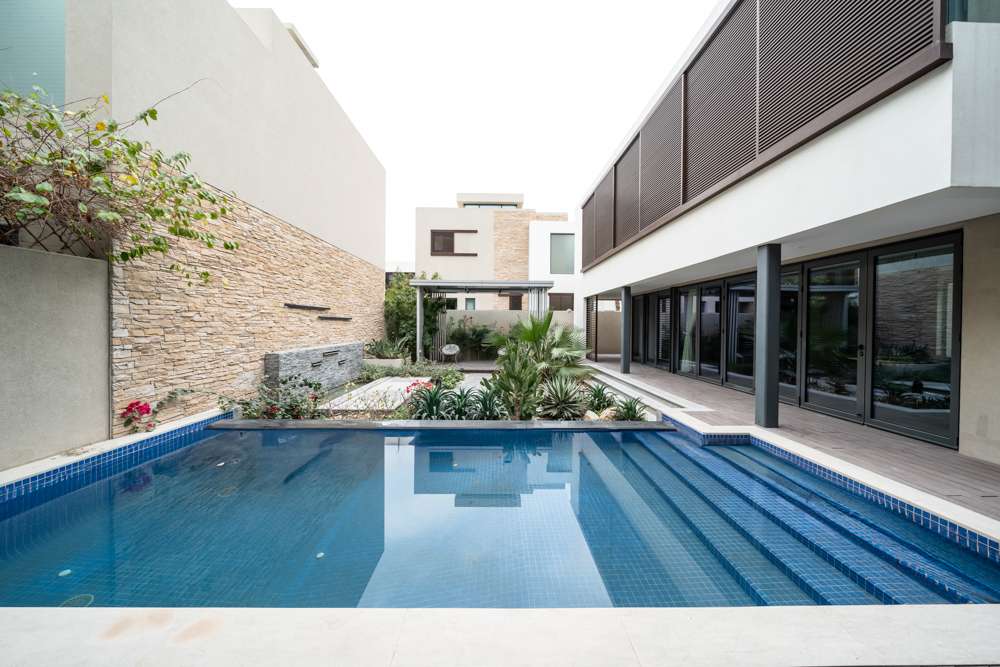
Luxury defines Dubai villas: Think vaulted ceilings, infinity-edge pools, and private gardens with Arabian landscaping. Large windows flood spaces with natural light, while balconies overlook manicured greens or skyline vistas. Wellness trends shine through—sauna-equipped master suites and air-purified interiors respond to health-conscious buyers.
Realistically, not all ready stock matches ultra-luxury benchmarks; budget options may forgo private beaches but compensate with communal spas.
3. Community Amenities for All-Day Living
Gated setups provide resort-like perks: Olympic pools, state-of-the-art gyms, cycling trails, and kids' zones. Security is 24/7, with CCTV and concierge services standard. Proximity to equestrian centers or golf courses adds recreational value, fostering a "suburban oasis" feel.
With 2026's family influx, amenities like on-site creches and pet parks are increasingly vital, enhancing rental appeal in high-yield areas.
4. Integration of Smart and Sustainable Tech
Over 70% of premium ready villas now boast smart ecosystems—app-controlled lighting, HVAC, and security via platforms like Google Home. Voice-activated features and EV charging stations are commonplace, supporting Dubai's smart city vision.
For older properties, retrofitting costs AED 50,000–150,000, a worthwhile investment given energy savings and buyer preferences.
These features elevate daily life, but inspect for wear-and-tear in resales to ensure long-term value.
Top Areas for Ready-to-Move Villas: Growth Hotspots and Price Insights
Dubai's villa enclaves vary by vibe—from beachfront glamour to golf-lined serenity. In 2026, focus on communities with 8–18% projected growth, driven by school proximity (commanding 35% premiums) and infrastructure. Ready stock is limited (mostly resales), so act fast.
1. Palm Jumeirah: Iconic Waterfront Luxury
This palm-frond island epitomizes extravagance, with ready villas offering Gulf views, private jetties, and beach access. Amenities include Nobu Residences' fine dining and yacht clubs. Prices: AED 25M–100M+, with 17.7% YoY growth. Ideal for HNWIs, but secondary market dominates—expect negotiations on 10–15-year-old builds.
2. Dubai Hills Estate: Family-Centric Powerhouse
A master-planned gem with 1,300 acres of parks and an 18-hole golf course, it's a top ROI pick (AED 4.5M–50M). Near Downtown (15-min drive) and GEMS schools, it saw 20%+ demand surge. Yields: 6–7%. Ready villas are scarce; prioritize Park Ridge for modern finishes.
3. Arabian Ranches: Suburban Family Favorite
Spanning three phases, this 700-acre haven features polo fields, vast parks, and ARA Retail. Villas (AED 2.5M–15M) boast private pools and gardens, with 15–20% growth forecast. Excellent for schools (Rancho Rosa Academy) and yields (6.5–7.5%), though traffic peaks during rush hours.
4. Jumeirah Golf Estates: Green Serenity for Golf Enthusiasts
Flanked by two championship courses, villas here (AED 3M–20M) offer tranquility and Earth & Fire Village dining. 8–12% growth expected, with strong resale liquidity. Ready options suit retirees or remote workers, but limited inventory means quick sales.
5. DAMAC Hills: Value-Driven Emerging Star
Blending affordability with luxury (AED 2M–10M), it features Trump International Golf Club and wellness spas. 15–18% growth projected, yields up to 7.8%. As a newer community, ready villas are fresher, appealing to mid-budget families.
Emerging Contenders: Emirates Hills and Tilal Al Ghaf
For ultra-luxury, Emirates Hills (AED 30M+) mirrors Beverly Hills with Montgomerie Golf. Tilal Al Ghaf offers lagoon vibes and 12% growth potential. Both have selective ready listings.
Overall, these areas promise 20–25% cumulative appreciation over five years, but diversify to mitigate cooling risks.
How to Secure the Best Ready-to-Move Villa: A Step-by-Step Roadmap
Navigating Dubai's market requires strategy, especially with 6–8% average yields but potential pitfalls like overvalued resales.
1. Set a Realistic Budget
Villas start at AED 2.5M (mid-tier) to AED 30M+ (luxury), plus 4% DLD transfer fee, 2% agency commission, and 5–10% service charges annually. Factor in AED 10,000–50,000 for inspections. Use DLD's price index for benchmarks—aim for 10–15% buffer against 2026's 3–8% growth.
2. Pinpoint Your Location
Match lifestyle to locale: Families favor school-adjacent spots like Arabian Ranches; investors eye high-yield Dubai South (8.2%). Tools like Bayut's heatmaps reveal commute times and appreciation trends.
3. Conduct Thorough Inspections
View shortlisted properties twice—day and night. Hire RERA-certified surveyors (AED 5,000–15,000) for structural, electrical, and pest checks. Verify NOCs from developers and utilities handover.
4. Partner with Trusted Professionals
Engage RERA-licensed agents for off-market deals and negotiations (they can shave 5–10% off prices). For investments, consult firms like Knight Frank for yield projections. Beware scams—insist on escrow via DLD's Ejari system.
5. Due Diligence and Financing
Review title deeds for liens; non-residents need 100% cash or mortgages (up to 50% LTV via banks like HSBC). Golden Visa eligibility (AED 2M+ investment) adds appeal.
By following these, you'll sidestep hype and secure a sound purchase.
Conclusion
In March 2026, ready-to-move villas embody Dubai's allure—luxury without delay—in a market rewarding the prepared. With tight supply and steady demand, they offer homes and havens alike, but temper enthusiasm with due diligence. Consult DLD reports, trusted advisors, and platforms like Property Finder to turn opportunity into enduring value. Your Dubai dream awaits—strategically pursued.
